
Seminyak has the beach clubs and Canggu has the surf, but Jimbaran has food worth crossing the island for: Michelin-approved tapas, Japanese omakase and some of Bali’s best beachfront seafood spots.
Bali has enough good food to fill several lifetimes, and every neighbourhood has its own culinary highlight. Seminyak has its boutique-lined streets, trendy restaurants serving inventive island flavours, and beach clubs where the fun runs as freely as the drinks. Meanwhile, Canggu has its surf breaks, a buzzy coffee scene, and some of the world’s best açaí and smoothie bowls. A little further south sits Jimbaran, a former fishing village that has become one of the most rewarding places to eat in Bali.
This stretch of coastline built its reputation on the island’s freshest catch. Today, Jimbaran holds its own well beyond seafood — Japanese omakase, clifftop paella, Michelin-approved tapas, often within a few minutes’ drive of each other.
Here are five restaurants in Jimbaran worth making the trip:
Here’s your itinerary: 72 Hours in Jimbaran: A Family-Friendly Bali District Loved for Its Seafood and Local Feel
1. Cuca
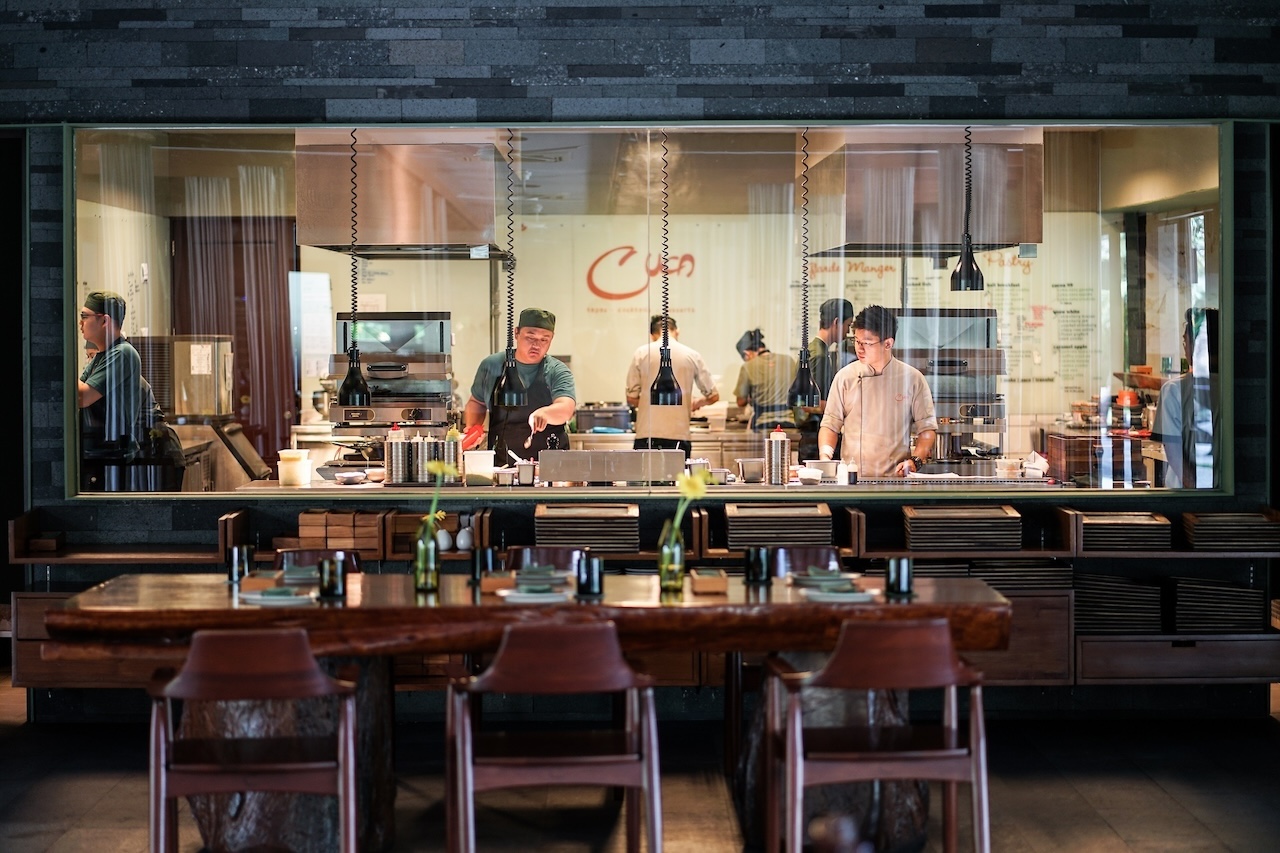
Cuca is a Jimbaran kitchen that treats local ingredients as the main event. The chef behind the pass, Kevin Cherkas, cut his teeth at three Michelin starred kitchens including the legendary Arzak and El Bulli in Spain, and the pedigree shows.
Expect tapas built for sharing, cocktails that earn their price tag, and desserts that steal the show just when you think you don’t have any stomach space left. It’s located just 12 minutes from Villa Kapungkur, making it an easy addition to any Bali stay.

The dish to order is the Beef Bone, hand chopped and fire grilled beef served with roasted bone marrow and garlic sticky rice. For the uninitiated, this is the fatty tissue inside the bone, roasted until custard soft and traditionally spread on like the world’s richest butter.
Pair it with the Spicy Kalimantan Crab, a soft-shell crab in tempura batter doused in a chili tomato gravy. They say this dish is meant for sharing, though good luck getting anyone to hand over their piece.
Read next: The Eat List: Chef Benji Cross of MASONRY. on His Fave Dining Destinations in Bali and Beyond
2. Honzen at AYANA Resort Bali

Honzen trades Jimbaran’s beachfront setting for a Japanese dining room built in the spirit of a traditional ryokan, with views onto a landscaped zen garden — a room hushed enough to make you drop your voice on the way in. This special restaurant is just a short drive from Villa Ambiente, and perfect for when you want to get a little dressed up for dinner.
The main hall covers sushi, sashimi and teppanyaki, which means any of your Japanese cravings are answered. Behind an unmarked door sits the real prize, the Sushi Kimura room, an intimate counter run by Chef Takumi Kimura, a veteran of some of Japan’s top hotel kitchens.
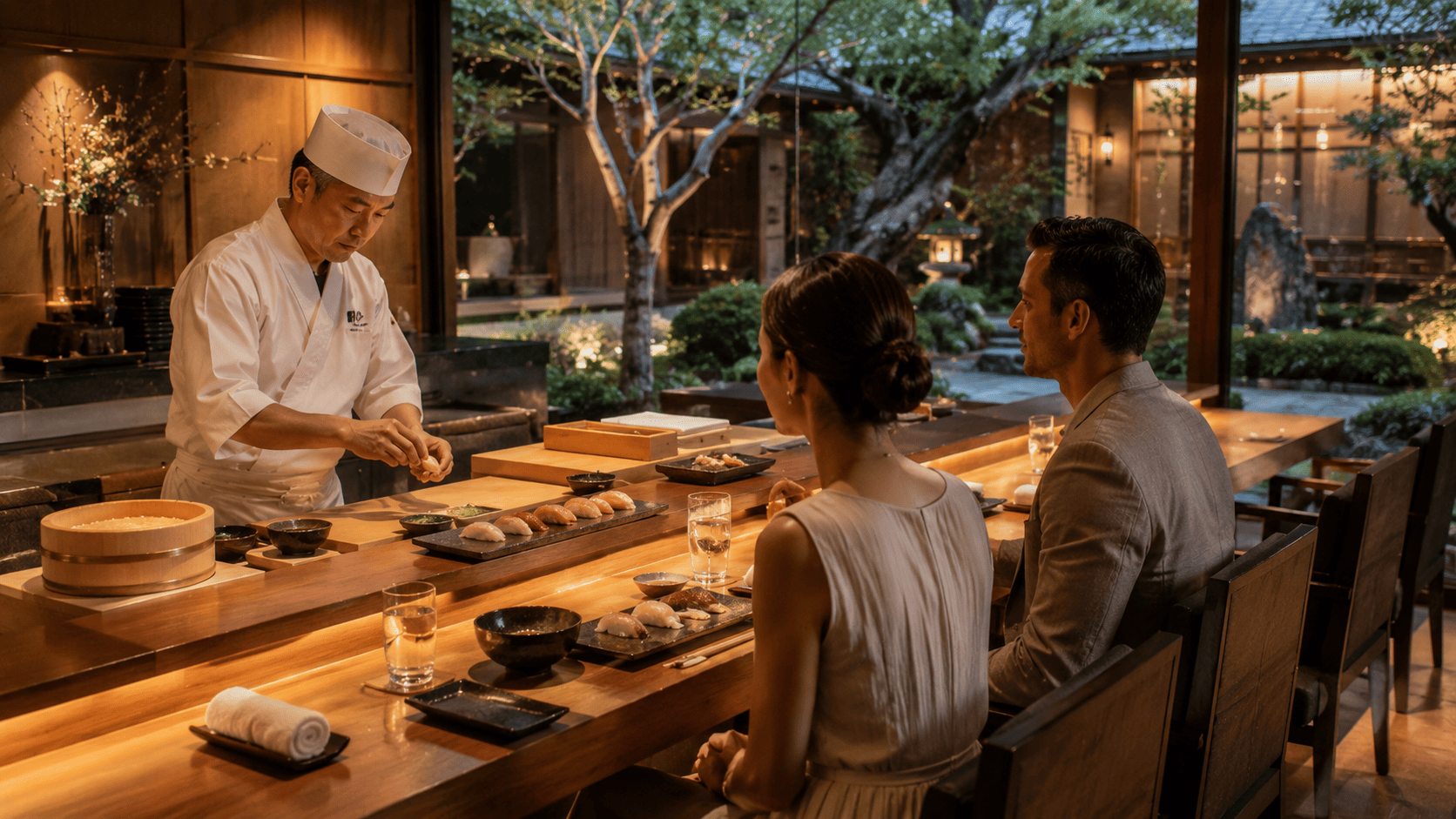
Book the counter and go for the omakase, a Japanese phrase that roughly translates to “I will leave it to you.” It hands the whole meal over to the chef, who builds a running sequence of sushi, sashimi and cooked courses around the freshest seafood at the market that morning.
For something more familiar, the teppanyaki rooms offer wagyu and seafood tableside on a hot iron plate (and they might even do some tricks for you). Either way, come hungry and with a clear schedule, since this is not a dinner to rush between beach club stops.
Take it from us: A General Manager’s Guide to Eating Well in Bali
3. Rumari at Raffles Bali
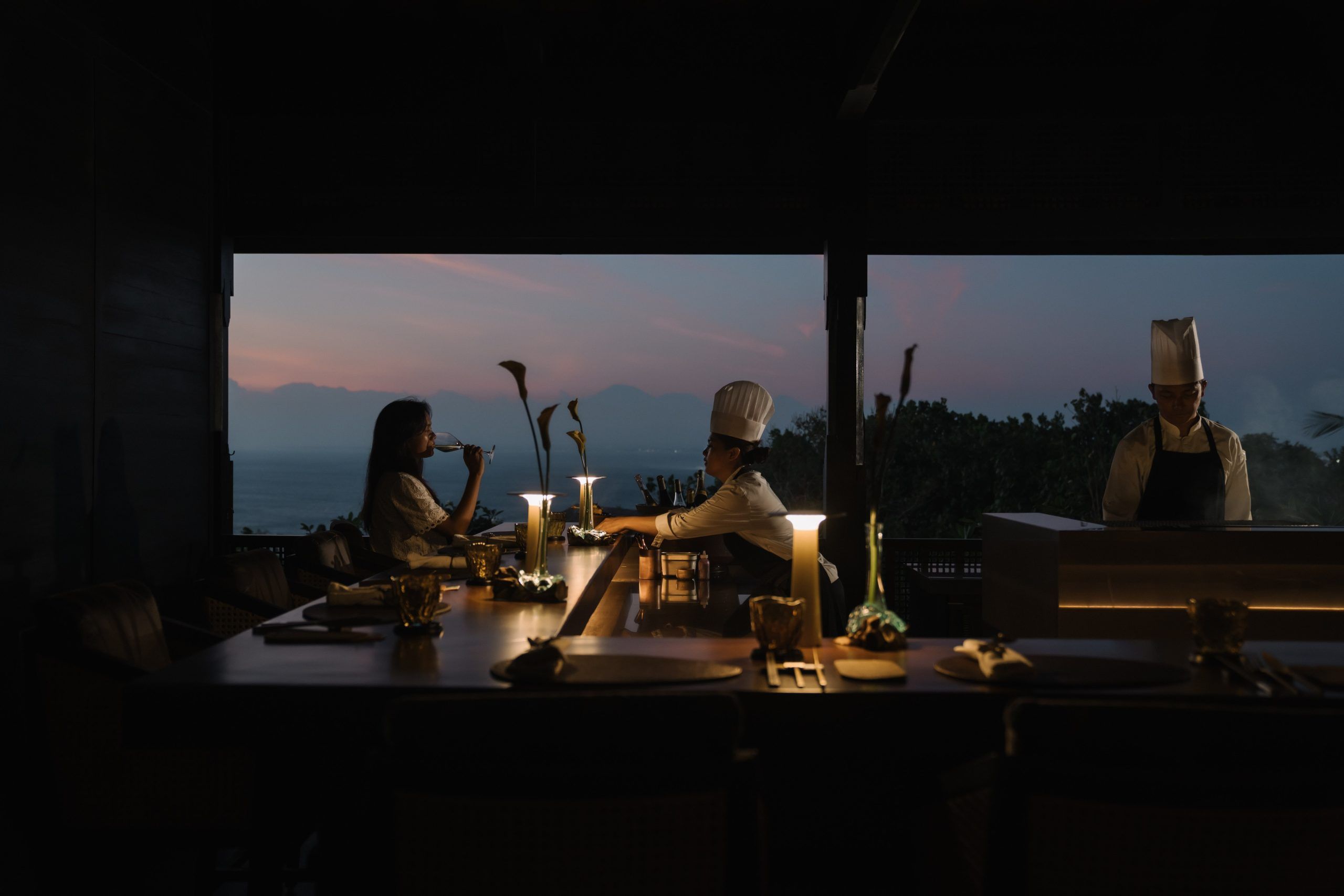
Rumari sits at the highest point of Raffles Bali, with views over Jimbaran Bay stretching out below the dining room like a private balcony over the ocean. Chef Gaetan Biesuz runs the kitchen on an eighty-twenty philosophy, pulling eighty percent of ingredients from across the Indonesian archipelago and letting the rest fill in the gaps. It sits a short drive from Villa Camellia, just steps from Jimbaran Beach itself.
For something more hands-on, book the Rumari Counter, an eight-seat omakase table tucked into its own corner of the restaurant where the chefs cook in full view and talk you through each plate as it lands. There is no set menu — just the freshest and most organic ingredients that they could find on the island, starting light and raw before working up to richer, cooked courses.
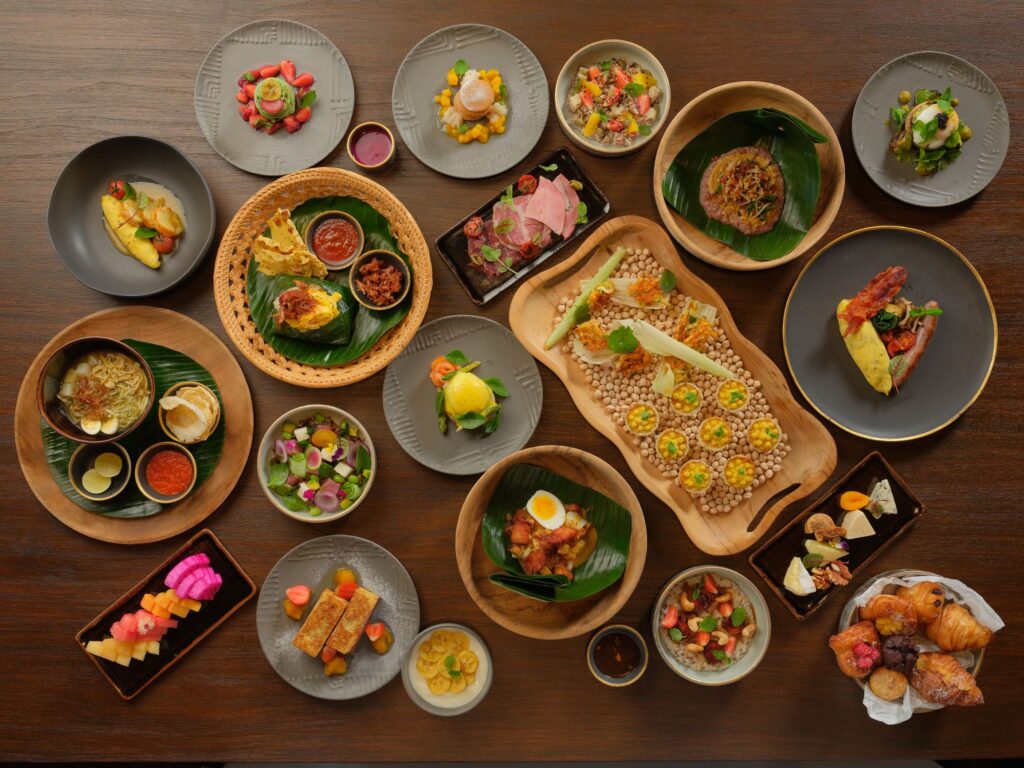
One dish worth ordering is the bamboo lobster with rujak, a version of Indonesia’s classic fruit and vegetable salad, tossed in a dressing that swings between spicy, sweet and sour in the same bite. It sounds like an unlikely pairing until you try it (and we promise, it will be love at first bite).
For something heartier, get the deconstructed rendang, which is made with Tokusen wagyu instead of the usual beef chuck. Rendang is a Sumatran curry simmered for hours in coconut milk and spice paste, widely considered one of the richest dishes in the world.
Hosting a party? Barbecue Time: 6 Bali Villas Made For The Best BBQ Parties
4. Opia
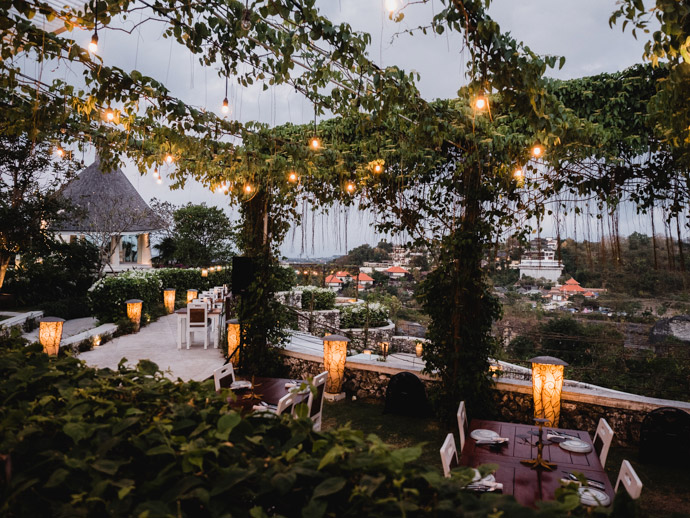
Opia sits on a hilltop above Jimbaran with a menu built by executive chef Don Fernando around plant-based cooking that shifts with the seasons. The plates arrive looking almost too good to eat, though that never seems to stop anyone.
The view alone is worth the climb — a wide, unbroken stretch of ocean best enjoyed with a sundowner before the kitchen sends out the first course. Book ahead for a table on the edge, since everyone else chases these seats once golden hour hits. The restaurant is a short drive from Villa Jamalu, a hilltop property perched above the same bay, a villa designed for those who love sweeping views (frankly who doesn’t?)
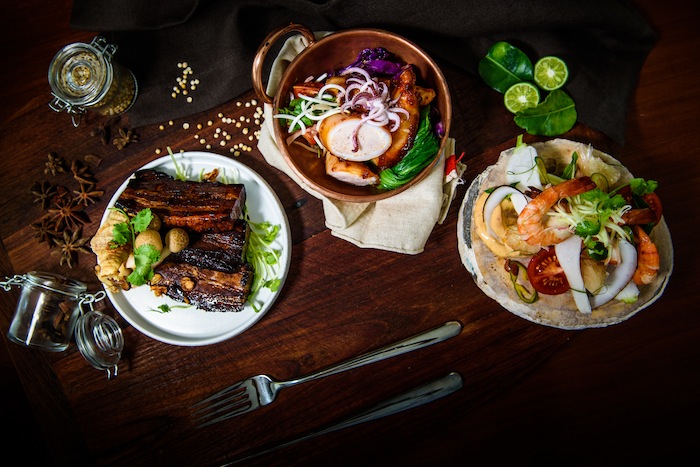
Start with the Yellow Flower Tuna, yellowfin dressed in sesame and yuzu with a scattering of nasturtium, a peppery edible flower that gives the dish a fresh, faintly mustardy bite. It is a light way to open a meal that only gets more interesting.
For the main event, order the Sawah, a whole crispy duck served with heritage rice, Balinese spices and pickled sambals — Indonesia’s answer to chili paste, made fresh at nearly every meal and varying from kitchen to kitchen, so no two plates ever taste quite the same.
Take a closer look: 20 Years After Eat, Pray, Love, What Is It Like to Visit Bali Now?
5. The Jimbaran Bay Seafood Strip
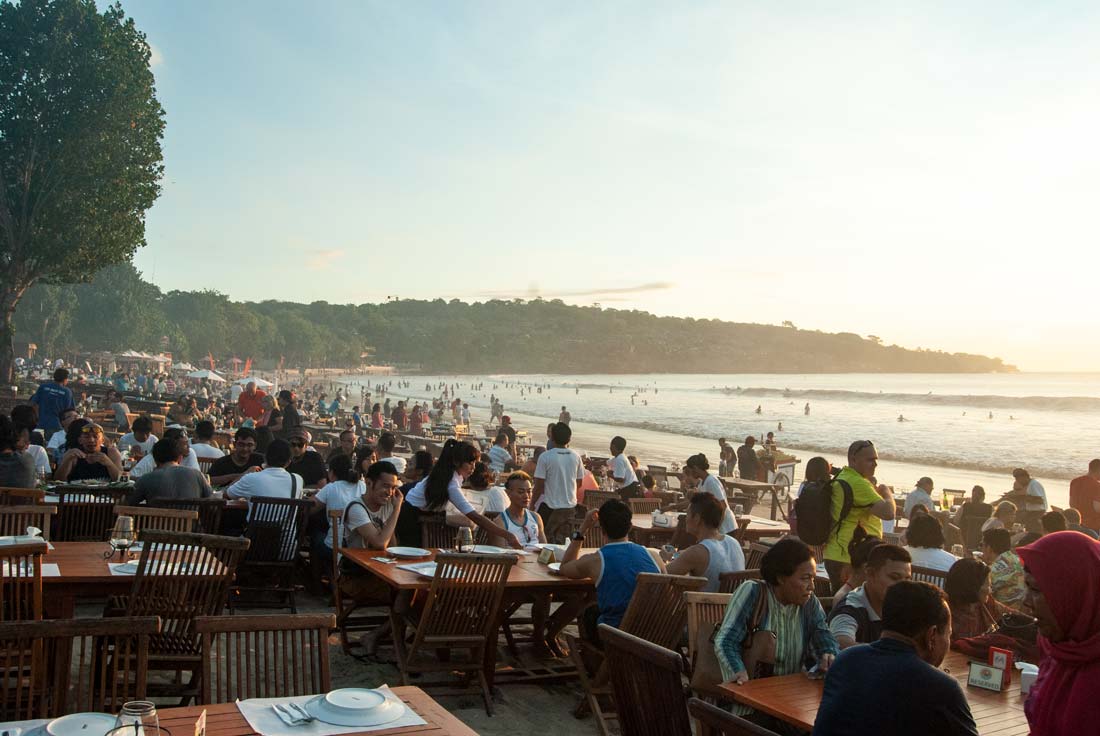
This is the feast you shouldn’t miss. Once the sun starts dropping toward the water, an entire stretch of Jimbaran Bay turns into one long dinner table. Dozens of open-air seafood cafes line the sand, each working from the same setup: bare feet, candlelit tables, and fresh seafood cooked to perfection.
There is no wrong choice on this strip. Menega Cafe remains the best-known name and the one most others get measured against, though Ganesha Cafe brings a slicker setting up north and Warung Ramayana holds its own in the middle. Pick whatever is swimming, shelled or crawling from the iced display case, then choose how you want it cooked.
![29 Best Restaurants In Bali [2023] | Eatbook.sg](https://eatbook.sg/wp-content/uploads/2023/05/menega-cafe-bali-1024x768.jpg)
Do not leave without the grilled clams at Menega, cooked the traditional way over smouldering coconut husks and finished with a garlicky, chili laced sauce that is addictive. This coconut husk method, common along Bali’s coast, gives the seafood a smokiness you cannot fake with a regular grill.
Order the ikan bakar too — a whole grilled fish rubbed in spices, and ask for kangkong on the side, a Balinese water spinach stir fried with garlic and chili that cuts through the richness. Come for lunch if you can, when the view is just as good and the crowds are nowhere to be found.
No matter where the rest of your Bali trip takes you, Jimbaran deserves a place on it — and it’s easy to see why some people build their whole stay around this stretch of coast instead.
Now the next question is – what to do next?
72 Hours in Uluwatu, Bali: Surf, Sunsets, and The Villa Worth Flying For
The Best Yoga Spots in Bali for a Relaxing ‘NamaStay’
Hands-On Activities in Ubud: The Best Craft Workshops, Cooking Classes and Cultural Experiences To Try