
Heading to Ubud, Bali? Here’s everything you need, curated by The Luxe Nomad
Every town in Bali comes with its own distinct charm: if Seminyak is the go-to spot for a good party and Canggu draws people in with chill, hipster cafés, then Ubud is where to go if you want to do a little soul-searching. (And rightly so—the movie Eat Pray Love was filmed here!)
Known as the cultural capital of Bali, Ubud is a must-visit for nature-lovers, spiritual seekers, and lovers of art and culture—though we’re willing to bet its green river valleys and postcard-worthy rice paddy fields can charm just about any traveler.
Scroll down for what you can’t miss when in this charming cultural town!
How to Get to Ubud, Bali
View this post on Instagram
Travel Regulations for Entering Bali
Planning a trip to Bali? Here’s exactly what you need to know before you fly in.
Most travelers can apply for an electronic Visa on Arrival (e-VOA), available to over 90 nationalities. It costs IDR 500,000 and allows a stay of up to 30 days (extendable if you’re not ready to leave paradise just yet). ASEAN travelers, on the other hand, can enjoy 30 days visa-free entry.
Before you land, you’ll need to complete a digital Customs Declaration within 48 hours of arrival. It’s quick, and it helps speed things up once you touch down.
A few key things to keep in mind:
- Your passport must be valid for at least 6 months
- Each traveler needs an individual visa, including children
- Card payments for visas may include additional bank fees
All in all, entering Bali is now simpler, faster, and far more focused on getting you from plane to beach with minimal fuss.
When you arrive at I Ngurah Rai International Airport, Ubud is only a 1.5-hour drive away. If you’re trying to picture Bali’s geography before you land, here’s a quick guide to common routes:
- Ngurah Rai International Airport → Ubud: ~35–40 km (~ 1.5 hours)
- Seminyak → Ubud: ~35–40 km (~ 1.5 hours)
- Canggu → Ubud: ~40–45 km (~ 1.5–2 hours)
- Sanur → Ubud: ~25–30 km (~ 1–1.5 hours)
- Uluwatu → Ubud: ~45–50 km (~ 1.5–2 hours)
Bali may look compact on a map, but travel times stretch and shrink depending on the island’s signature companion — traffic — so it’s always best to plan with a little breathing room.
Once in Ubud, we recommend hiring a private car to help you get out and about. (Heads up: ride-hailing services and metered taxis aren’t allowed to pick up passengers at the town center, though drop-offs are allowed).
This might be help: The Luxe Nomad’s Travel Guide to Bali 2026
When to Go to Ubud, Bali
View this post on Instagram
Ubud keeps things simple when it comes to weather: dry and wet, with not much in between.
The dry season (April to September) is the crowd favourite, with clear skies, warm days, and ideal conditions for everything Ubud does best—temple visits, rice field walks, waterfall-hopping, and the occasional “I’ll just do a light hike” that turns into a full adventure. June to August is the sweet spot, with sunny mornings and cooler evenings that make exploring feel effortless.
The wet season (October to March) brings heavier rain and occasional thunderstorms, especially around January. Plans may need a bit more flexibility, but Ubud’s slower pace, lush landscapes, and cosy cafés make it surprisingly easy to lean into the rain rather than fight it.
If weather isn’t your main concern, timing your visit around local events can add something special to your trip. Nyepi (Balinese Day of Silence) which falls on March offers a rare, island-wide pause unlike anywhere else in the world, it’s worth checking official calendars for exact dates. Another highlight is Ubud Open Studios, where local artists open their creative spaces to visitors for a more intimate look at the town’s art scene; keep an eye on official listings for updated schedules.
In Ubud, timing isn’t just about sunshine, it’s about what version of the island you want to experience.
In case you missed it: Nyepi Day: Why Bali Welcomes the New Year in Silence
Where to Stay in Ubud, Bali
If you’re in need of a break from the daily hustle and bustle, might as well go all out. Or at least, that’s how it is when you choose #ThatVillaLife. Here are our top picks for stays that will drown out those worries:
1. Nag Shampa Private Estate
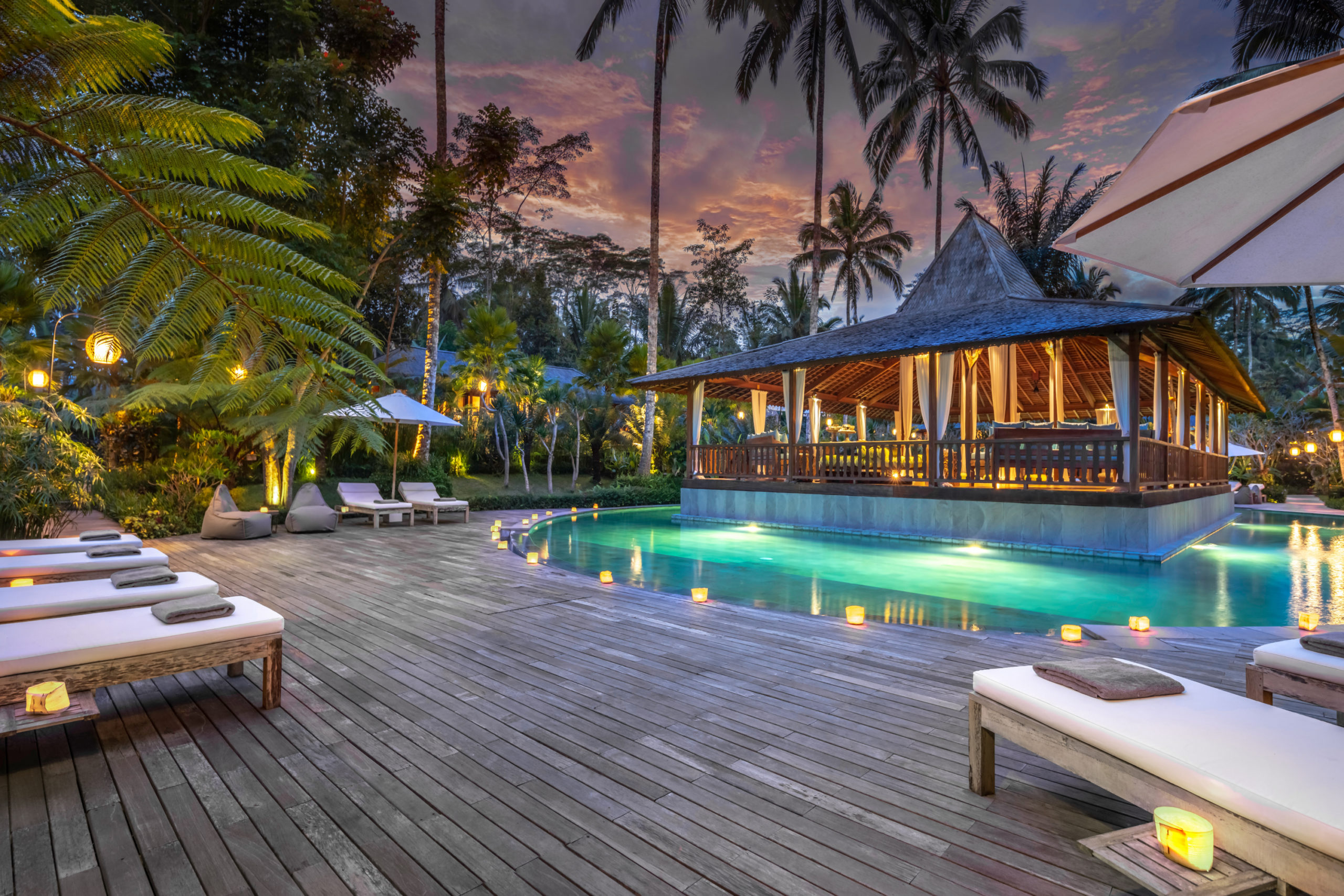
What you’ll get: At Nag Shampa Private Estate, you arrive in Taro village and quickly realise this villa is a well-designed excuse to be on vacation. The estate hosts up to 16 guests across eight ensuite bedrooms set in Joglo-style buildings that balance a modern-Javanese craftsmanship.
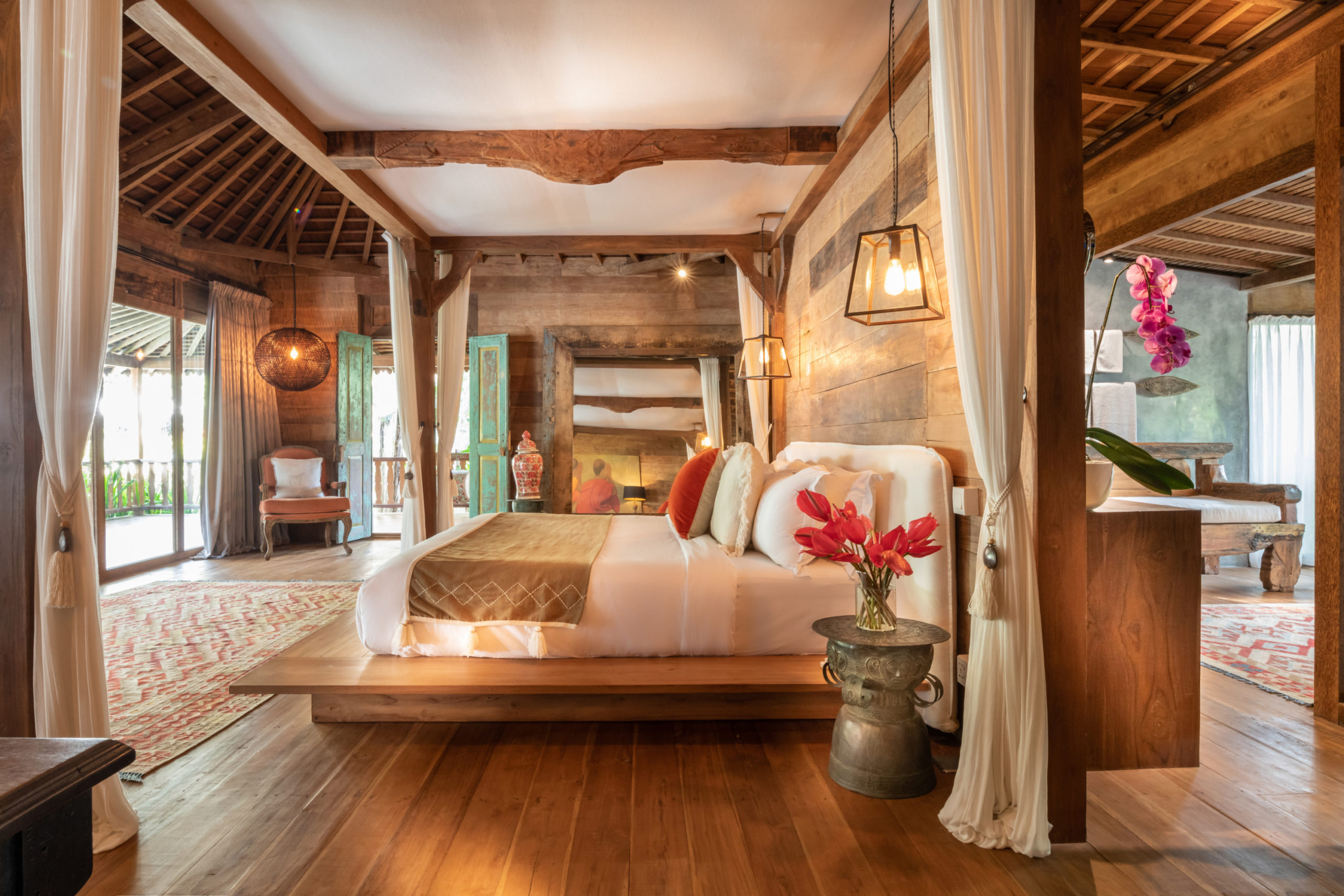
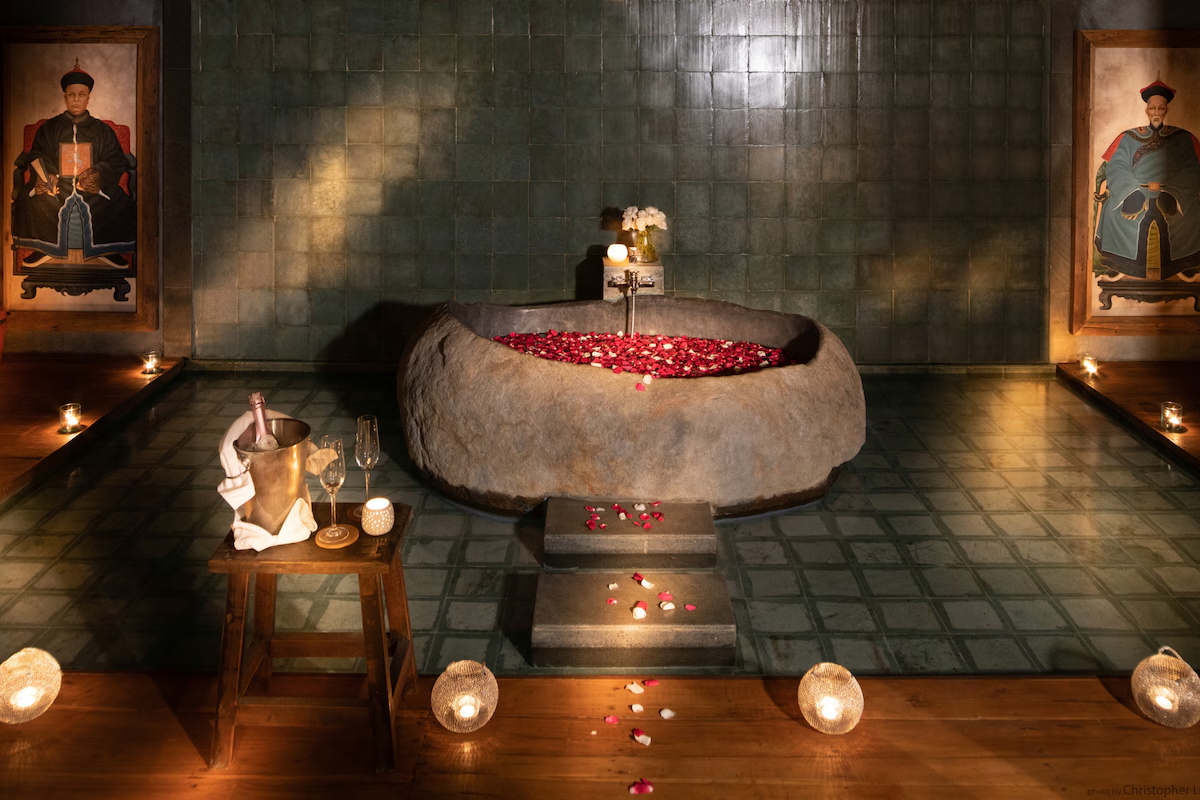
What you’ll love: Looking for a last-minute stunning stay? The Istana Suite can be booked on its own, but it doesn’t do “limited experience.” Guests still enjoy the full estate, from five pools to open living spaces that make lingering feel like the default setting.
What to do: Start with a swim in one of the five pools (you’ll likely lose count), wander over to the yoga shala if you’re in the mood for a good stretch, and let meals from the estate’s gardens ignite into endless conversations
Nag Shampa Private Estate: Starts at USD 1,705++ a night | BOOK NOW!
Read more: Postcard From Here: Nadia Fairfax-Wayne Embraces Slow Living At Nag Shampa Private Estate In Bali
2. Crystal Castle
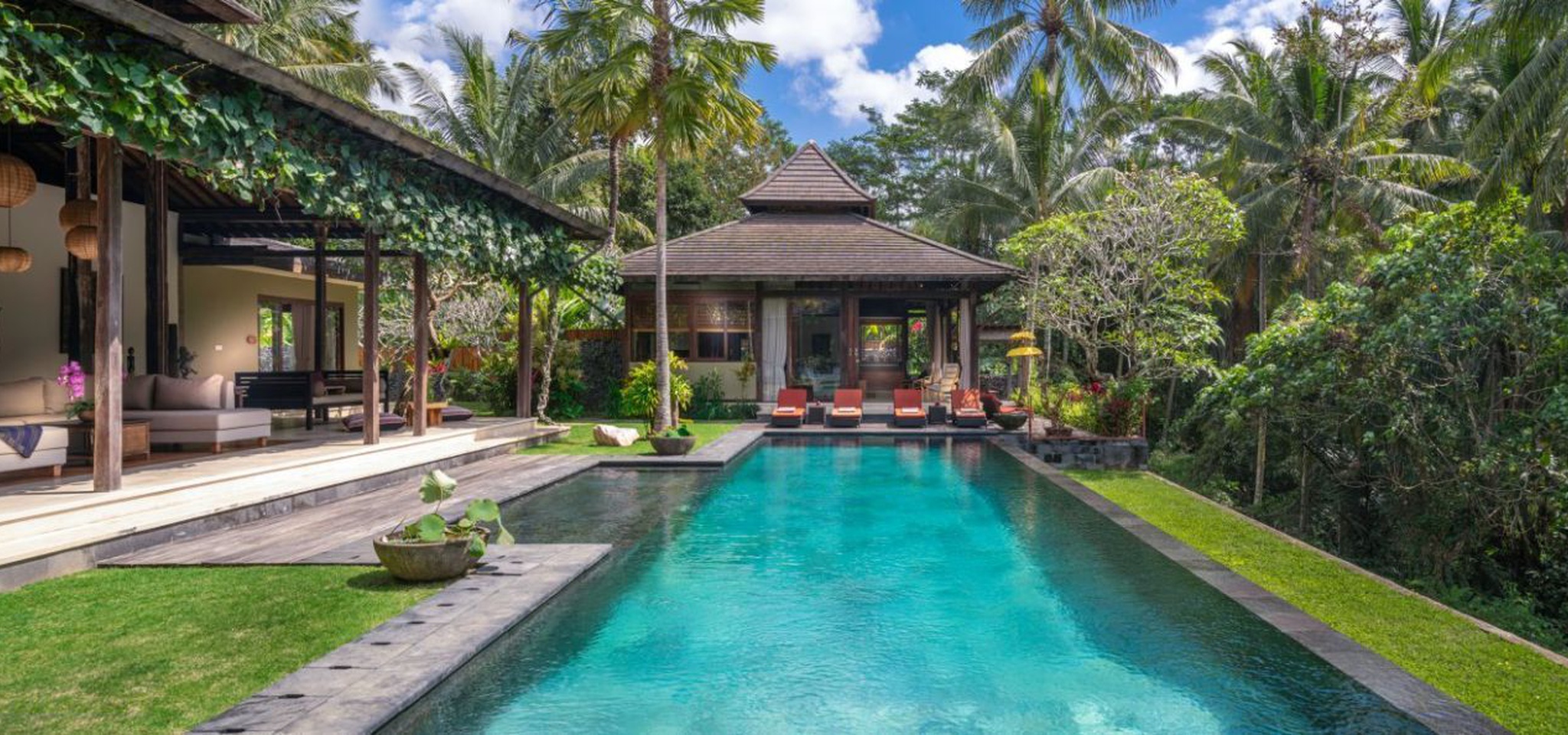
What you’ll get: A spacious 7-bedroom, 6-bathroom wellness villa and a huge open living area and a large swimming pool. The highlight of it all is the Yoga Shala with a rose quartz and pebble reflexology spiral; partnered with the Spa Massage Pavilion, everything’s set for healing and rejuvenation.
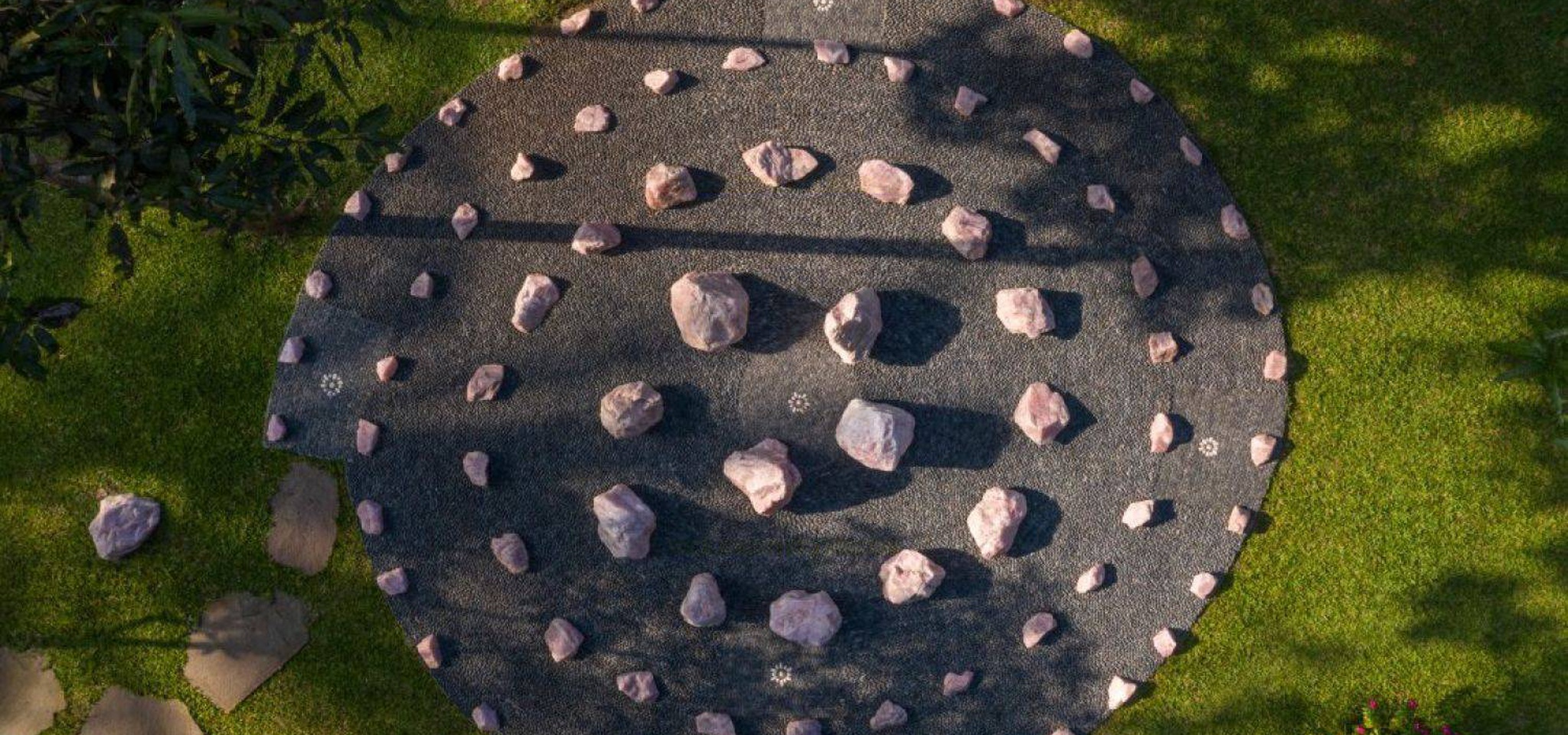
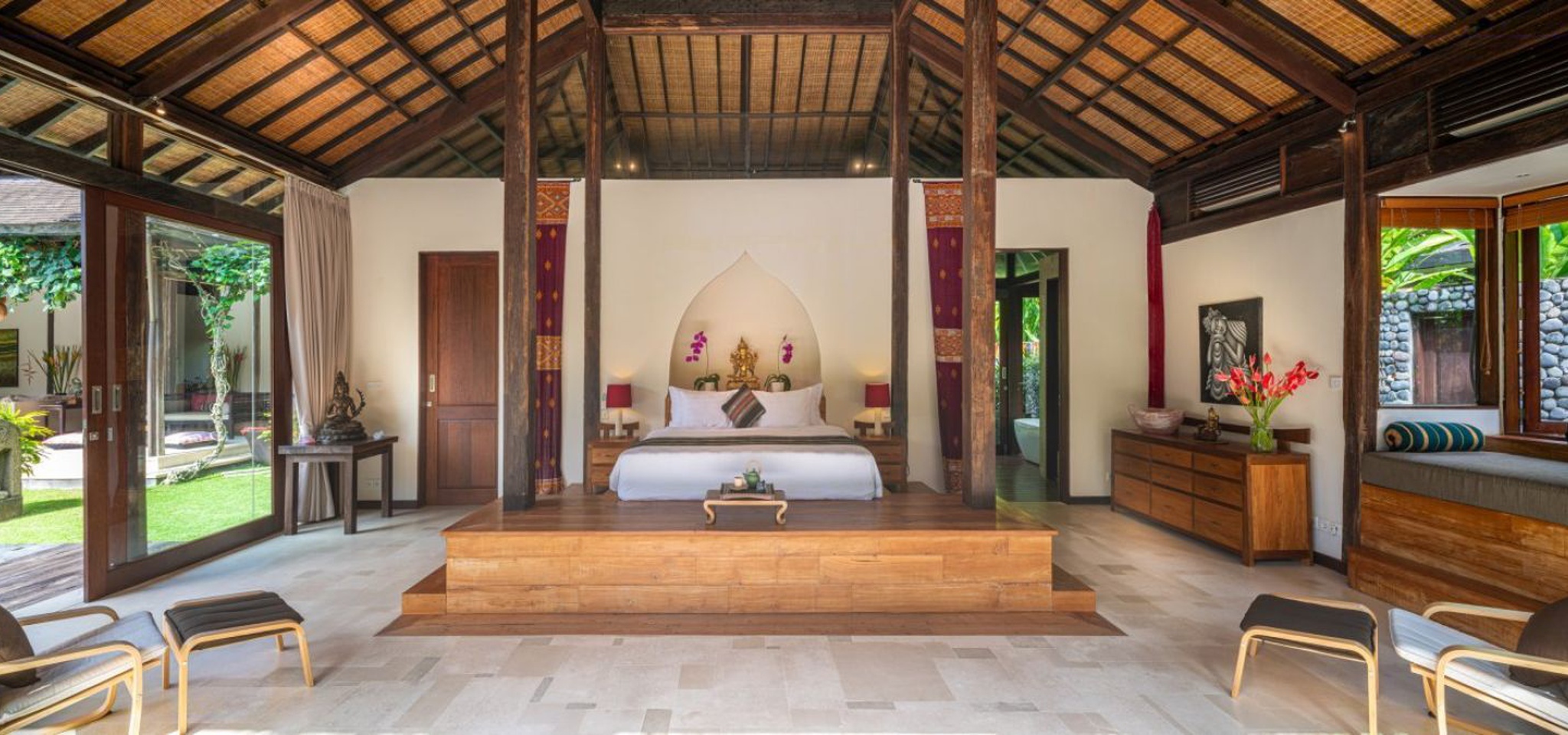
What you’ll love: A peaceful spot in Bali where most rooms open to jungle views. Expect a full soundtrack of nature — insects, birds, and the occasional late-night cameo. The villa is also retreat-ready, with flexible bedding configurations that make it easy to host anything from a friends’ getaway to a more structured group stay.
What to do: Gather your friends for a weekend getaway that’ll cleanse everyone’s mind, body, and soul. This villa is best for a much needed pamper/self-care holiday with a big group.
What to Do in Ubud, Bali
1. Sayan House
View this post on Instagram
Grab a bite or a drink at the edge of the jungle! This fusion restaurant serves up Japanese and Latin dishes that merge “in an organic yet striking way.” That combination of flavors, enjoyed with twinkling lights over Ubud’s greenery, makes up a meal that’s bound to make a lasting impression. Make a reservation here.
2. Waterfall Trecks
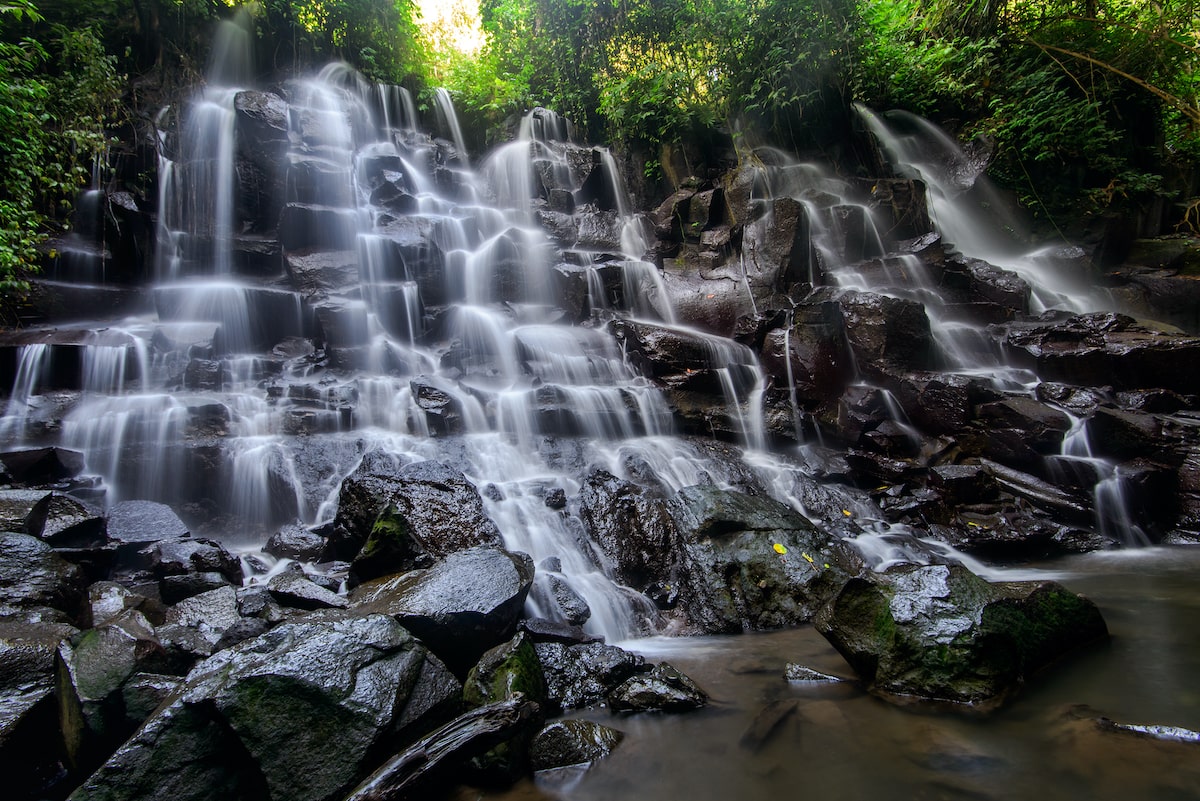
Just outside town, the jungle opens up to some of Bali’s most photogenic waterfalls. Kanto Lampo Waterfall is known for its tiered rock formations and cascading streams, while Tukad Cepung Waterfall hides inside a cave where sunlight beams through the opening, perfect for that “light falling from nowhere” moment. Hiring a local guide makes getting there easier and adds context you’d otherwise miss.
Let Ubud inspire you: Hands-On Activities in Ubud: The Best Craft Workshops, Cooking Classes and Cultural Experiences To Try
3. Pura Tirta Empul
View this post on Instagram
One of Indonesia’s busiest water temples, Tirta Empul has several holy springs believed to have been created by the God Indra. The water that flows in this sacred temple is believed to purify those who bathe there. Today, locals and tourists alike are welcome to participate in the purification rituals.
4. Ubud Monkey Forest
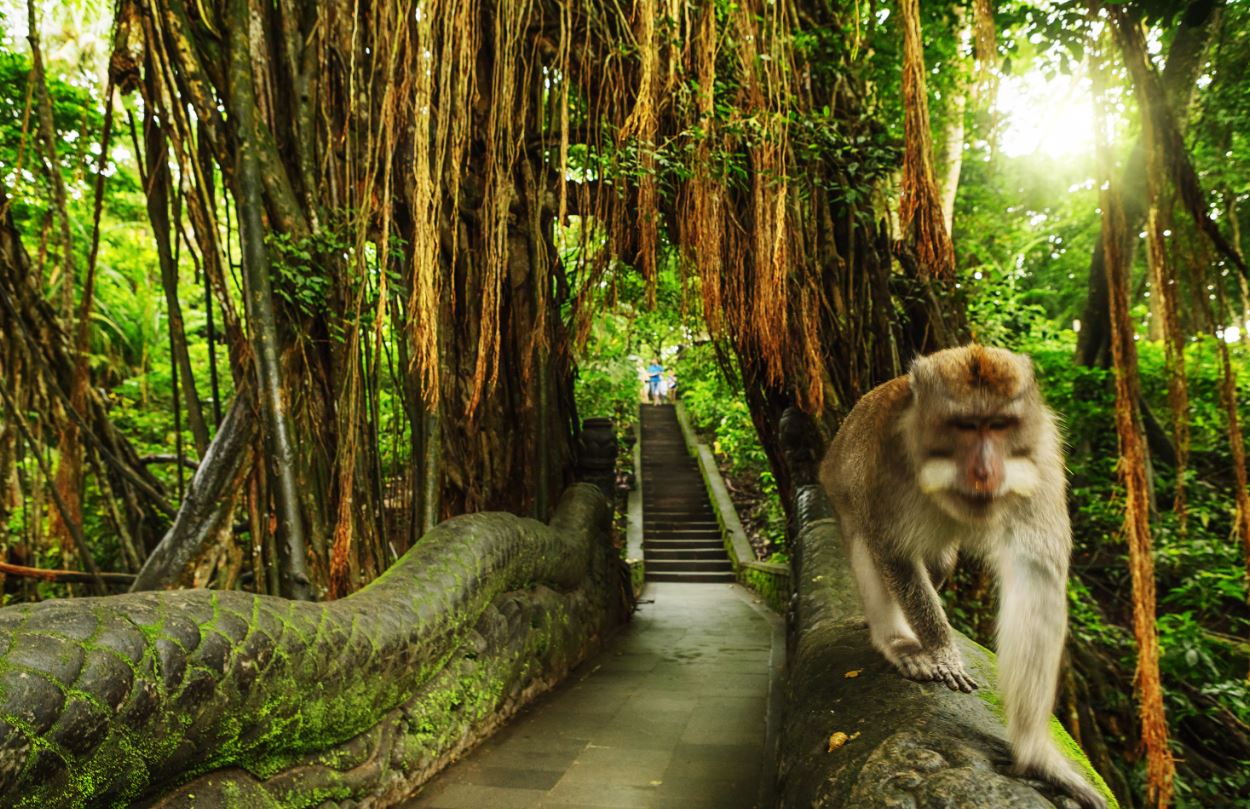
This sanctuary and natural habitat is home to about 1,049 Balinese long-tailed macaques. Here, nature and history meet among the ancient statues and sculptures, a cave, and temples, all within the lush forest. Learn more about why the monkey and its mythology is significant to Balinese art and tradition—but just be careful not to feed them!
5. Ubud Markets
View this post on Instagram
Known for its craftsmanship, wide range of cuisine, and unique finds, it’s not surprising that these qualities shine in the many Ubud Markets that line the streets. Tourists flock to different street markets, depending on the vibe they’re after. A popular one is Ubud Art Market along Jl. Raya Ubud (open from 8am-5pm), a maze of apparel, silk scarves, woven bags, hats, baskets, kitchenware, statues, and lots of other handcrafted goods.
Foodies will love starting the day at the Fresh Market (opens at 5am), where tropical fruits and vegetables, among other local delicacies, are offered right in time for breakfast. Meanwhile, night owls will enjoy checking out the Ubud Night Market that’s decked out with pretty much everything from authentic street food to flea markets.
Head on a food trip: The Best Restaurants in Ubud: Where to Eat, Drink and Be Merry in Bali’s Culinary Mecca
In-Villa Experiences in Ubud
Ubud is made for wandering, but it’s just as magical when you bring a slice of it home to your villa.
If you’d rather stay in, The Luxe Nomad can curate experiences that still feel deeply rooted in Bali’s culture and rhythm. Think in-villa massages that rival any spa in town, a private chef preparing local favourites just for you, traditional Balinese dance performances under the night sky, or even a guided cleansing ceremony arranged in the comfort of your own space.
These are the kinds of moments our concierge service can curate for you, tailored to how you want to experience Ubud, no traffic required.
Ready to experience Ubud, Bali?
The Blue Mind Effect: 10 Beachfront Villas in Asia Where Water Resets the Mind
Villa Review: Cloud Nine Ungasan in Bali Is Exactly What It Sounds Like
Why Ubud Is the World’s Wellness Capital of Rest, Ritual and Renewal
